In Progress: Seaside Chestnuts, A New Site-Specific Installation
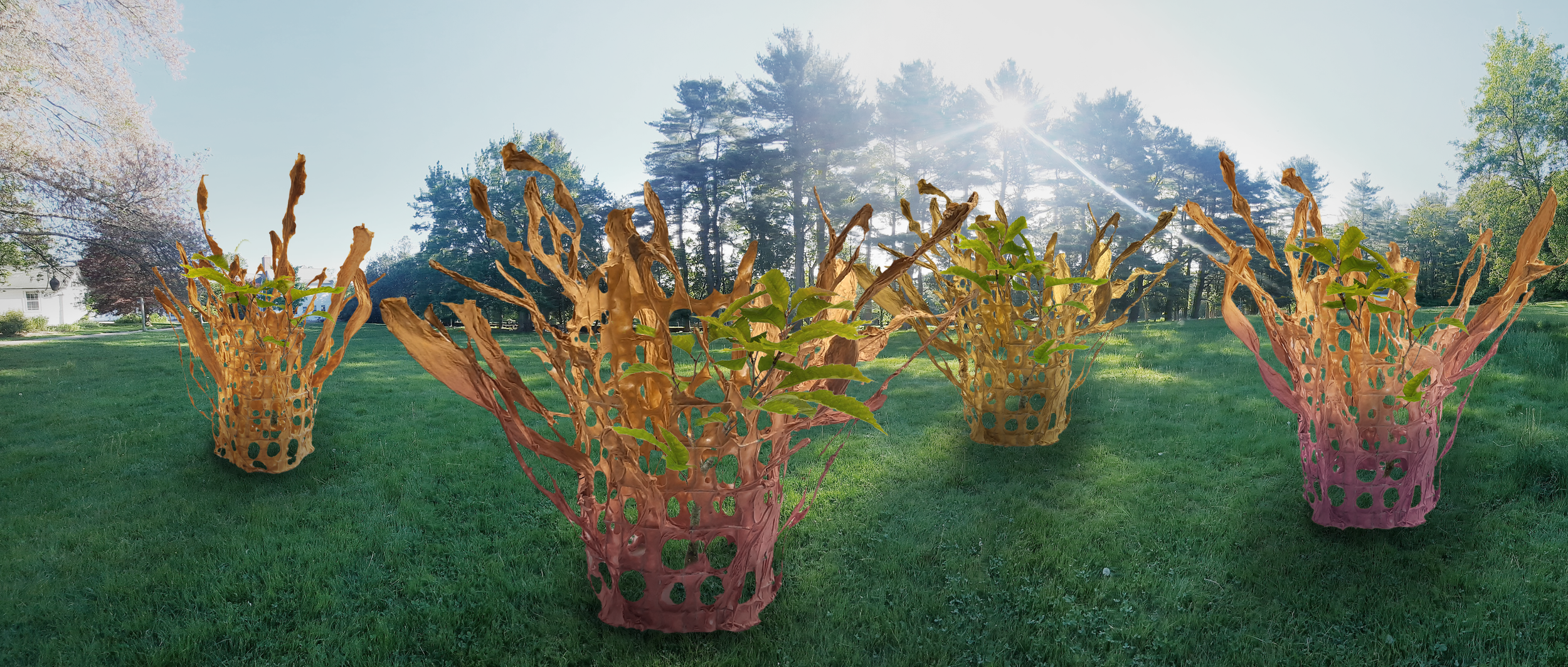
Initial concept illustration. Seaside Chestnuts, 2026, Chinese American chestnut trees, flax, leftover fencing, milkweed, black walnut, goldenrod, beeswax.
I’m in the midst of creating Seaside Chestnuts, a living installation, on view June 1, 2026 🎉 at Moose Hill Farm in Sharon, MA.
It all started with an Invitation
The Trustees of Reservations is the largest land trust organization in Massachusetts, and the oldest in the United States. Tess Lukey, their incredible Associate Curator of Native American Art, invited me as one of three contemporary artists from the Northeast to engage with different Trustees sites for the The Land Tells Our Stories exhibition. Thank you Tess for your vision, The Trustees and staff of deCordova Sculpture Park & Museum, and supporters of these installations.
The Land Tells Our Stories is part of Art & The Landscape, an initiative that commissions site-specific artwork, designed to help tell the story of treasured places of the Trustees and tie together threads of art, nature, community, and history.
As for my installation, Seaside Chestnuts:
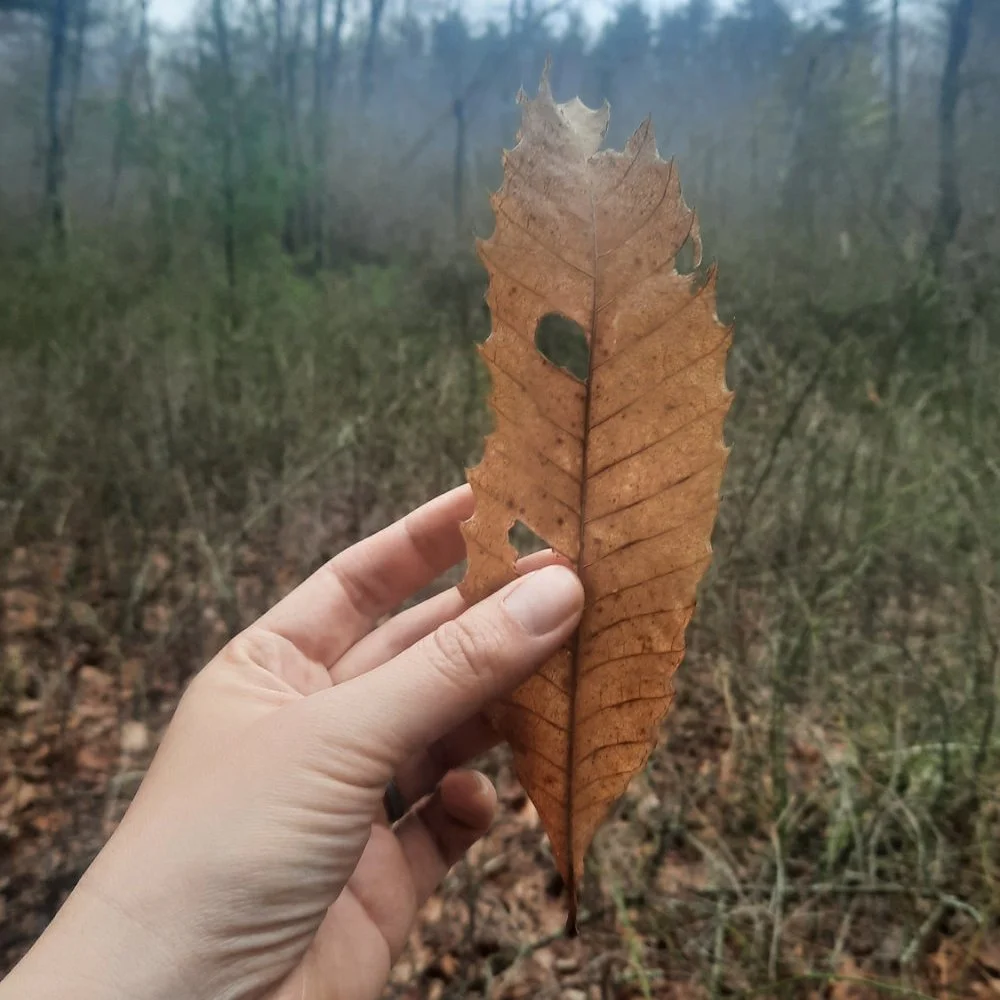
American chestnut leaf I found whilst hiking around at Moose Hill Farm
Inspiration at Moose Hill Farm
Moose Hill Farm in Sharon, MA is right off of I-95, halfway between Boston, MA and Providence, RI. You can see the Boston skyline from Moose Hill!
It also has extremely rare, mature American chestnuts growing wild in its forests. Once a common tree species in eastern North American, American chestnuts are now functionally extinct because of a blight that arrived 100 years ago.
Moose Hill Farm also sits on a literal future edge. If the polar ice caps melt completely, the projected edge of the ocean coastlines will rise up to the hill itself.
This is the Trustees site where I chose to install work.
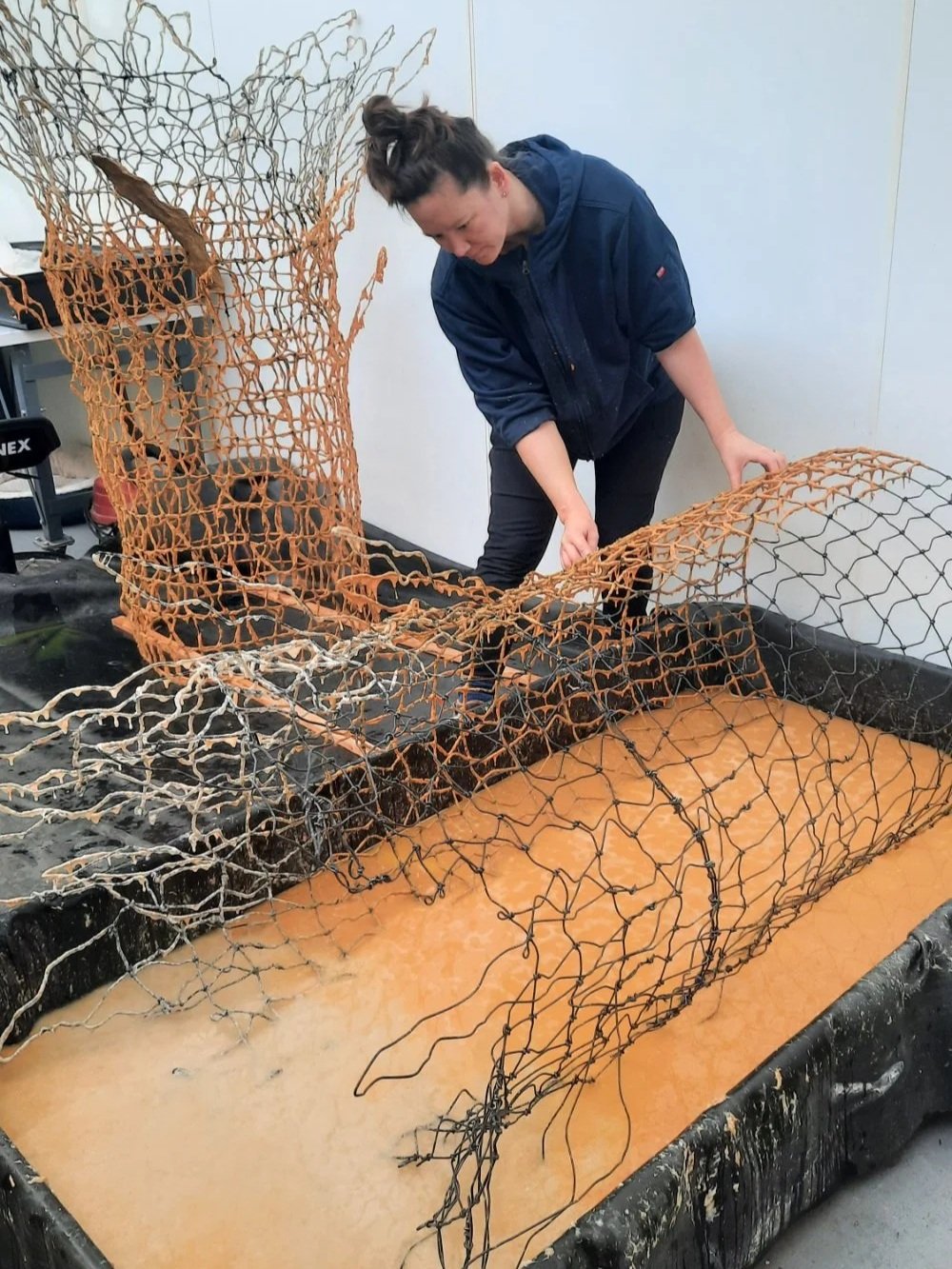
I made 11 forms that are around 6 feet tall from leftover fencing from a Moose Hill barn. Here I am, dipping them into the paper pulp to coat the wire.
Seaside Chestnuts, A Site-Specific Installation
At one of the Moose Hill meadows, I will be installing 11 American, Chinese, and hybrid chestnut trees provided by The American Chestnut Foundation (TACF). As a multiracial artist of Taiwanese-Chinese descent, I find kinship with these hybrid trees that resist the devastating blight.
Thank you to TACF staff and the local TACF Massachusetts / Rhode Island Chapter for your incredible expertise and support of this project! And to the enthusiastic students and teachers at the Cooperative Nature School (right next to the installation site at Moose Hill) who helped with the soil testing.
To evoke future coastlines, each tree will be protected from deer by seaweed-like sculptures made from the farm’s leftover fencing. Thank you to my loving mustached partner Derek for helping with the fencing wire!
After making the wire sculptures, I dipped the 11 forms into paper pulp made from local Rhode Island flax, and Moose Hill milkweed fiber, goldenrod, and black walnut.
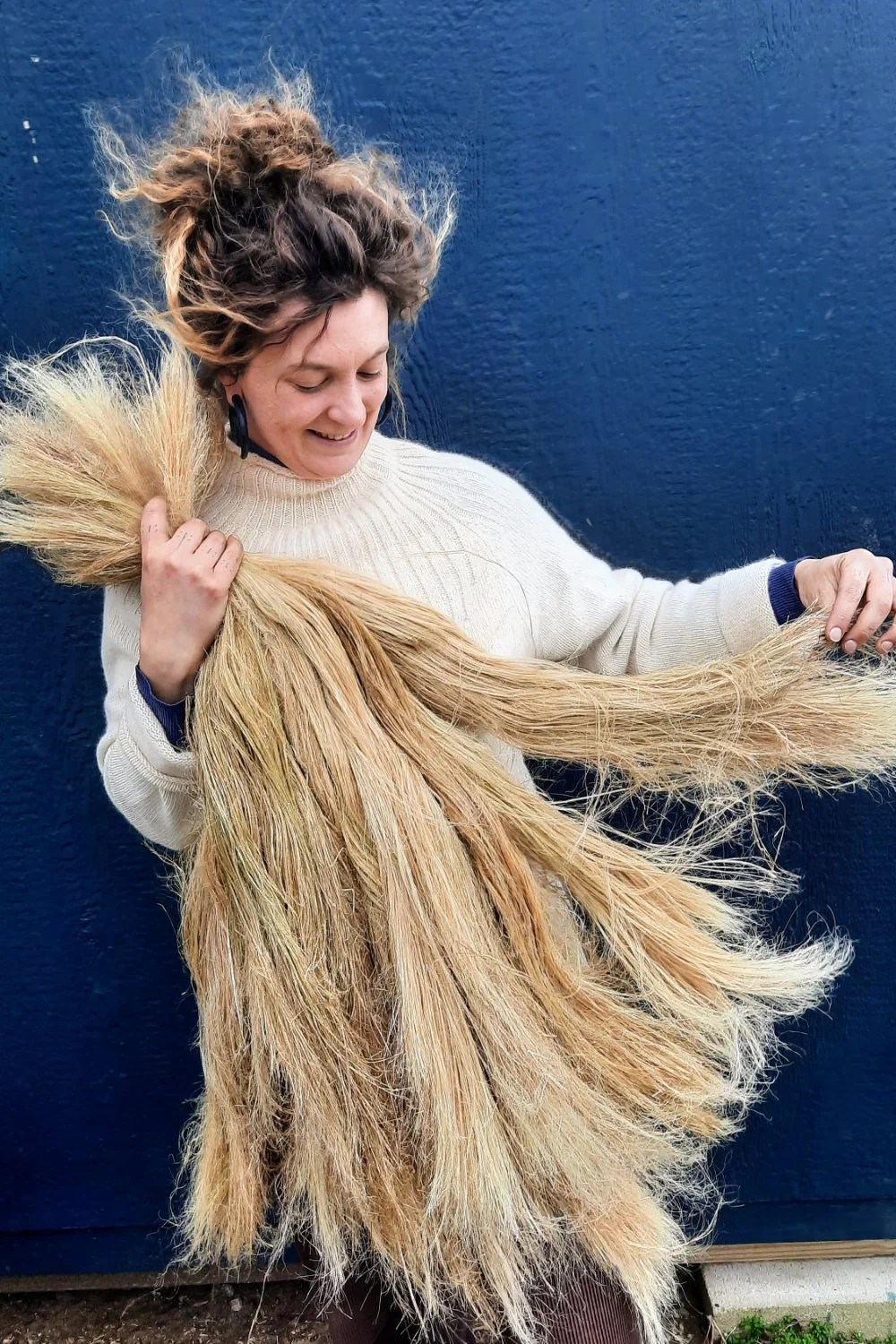
Kidder Gowen, Hawk & Handsaw Farm flax farmer, holding a few pounds of beautiful flax fiber that I used for paper pulp.
Rhode Island Flax
Big thanks to Kidder Gowen of Hawk and Handsaw Farm for providing their Rhode Island flax for the paper pulp mix (yes, flax grown in Rhode Island, USA!!!!!!!🔥🔥🔥). Located on Aquidneck Island, Hawk & Handsaw Farm is a regenerative vegetable and herb market farm and native eco-type plant nursery, that also grows bast fiber & natural dye crops. Kidder has over a decade (!) of flax fiber growing, harvesting, and processing knowledge.
Luckily for me, there was already a barn full of dried flax at Hawk & Handsaw Farm, enough for this project. So since the beginning of this year, I’ve been popping over when I can to help Kidder process the flax using a super old-school wooden tool called a flax “brake.” 💪
Thank you to everyone who lent a hand during “flax day” at the studio, including the Southeastern New England Fibershed, folks from Coggeshall Farm Museum, and RISD landscape architecture students.
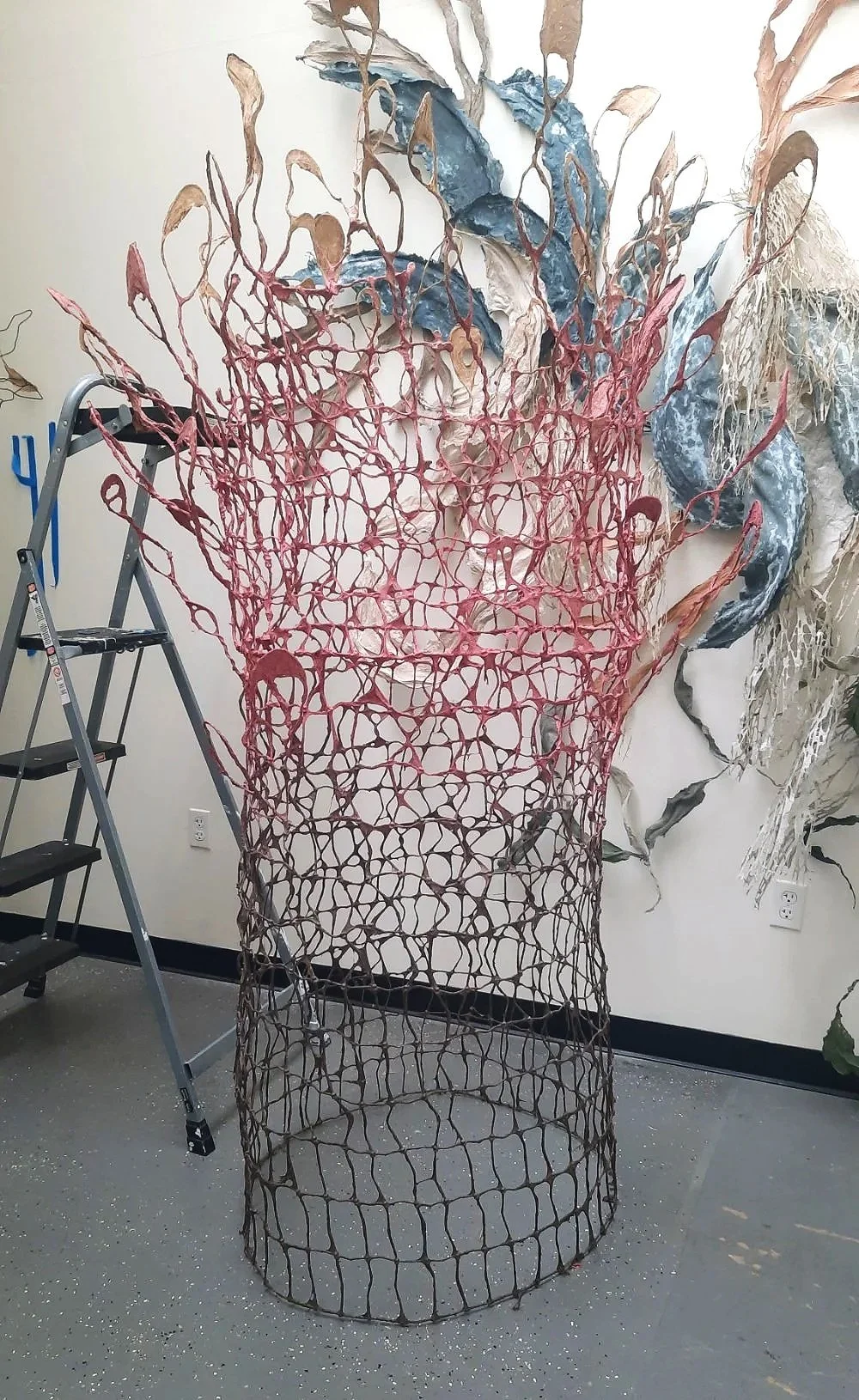
work-in-progress in the studio
I view this living installation as a participant with both people and place and time, as the paper will change as the trees grow taller and taller.
The paper is actually quite durable because of the flax and because of how I pulped it in the Hollander paper beater, plus the beeswax, so don't worry about putting these outside.
In a couple years, the protective forms will be removed once the trees are big enough to survive the deer. Incredibly, chestnut trees can live to 500 years!
on view starting June 1, 2026
Signup for my email list below if you want to get notified when the installation is on view, and how to find it. Don't worry, you don't have to hike to see the artwork, because it will be in a meadow right next to a parking lot at the Cooperative Nature School.
Stay curious,
May