New Ecologies
I wander rivers and coastlines, observing novel plant and seaweed communities thriving in distressed lands and waters. Nature is constant change and movement, and its plants are responding in abundance to how humans have degraded the Earth.
Collected plant fibers and seaweeds turn into paper pulp, which coats discarded electrical and communication wire. I make many small, abstract sculptures of plant forms and water. In a stream of consciousness, I connect the fragments to reveal new amalgamations of spiritual resonance.
These sculptures reflect processes of growth and new systems of relationships. They change and move as they give opportunity for healing, calm, and nourishment in a crisis-filled world.
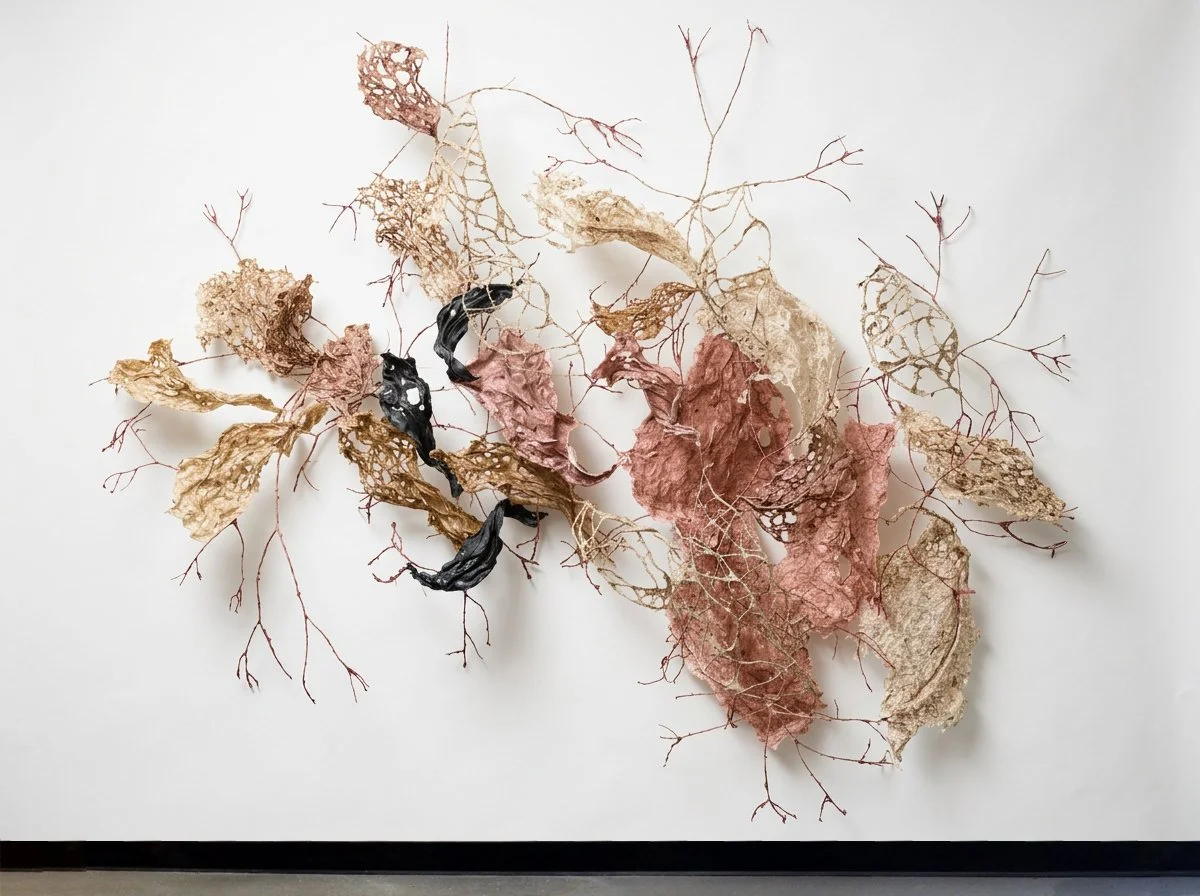
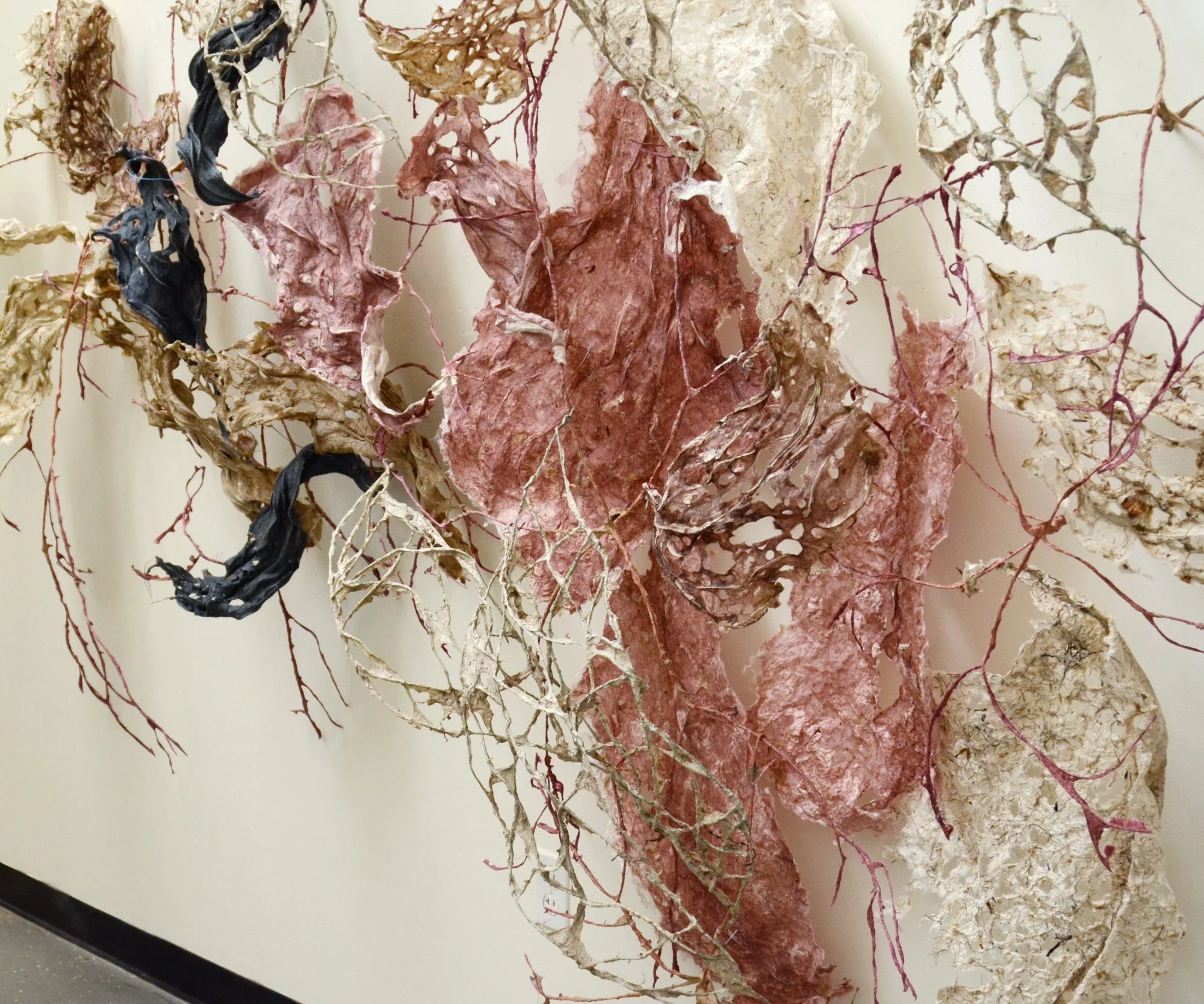
Poughkeeste Coastline
10 x 8 x 1 feet, flax, seaweed, paper mulberry, pigments, leftover wire, 2026
I kept visiting a particular coastal site over the winter months, without knowing why. There were skeletons of a beach plant, bladderwrack seaweed holding fast to rocks in low tide flats, cold wind, multi-colored dune grasses, and a magical light to the ever-changing waters. Each visit, the place was different. Each visit, I keep changing too. This sculpture also keeps changing over the months.
Much of the translucent handmade paper is actually an innovative seaweed paper-bioplastic material. It lets light pass through, and shrinks and hardens into unexpected shapes.
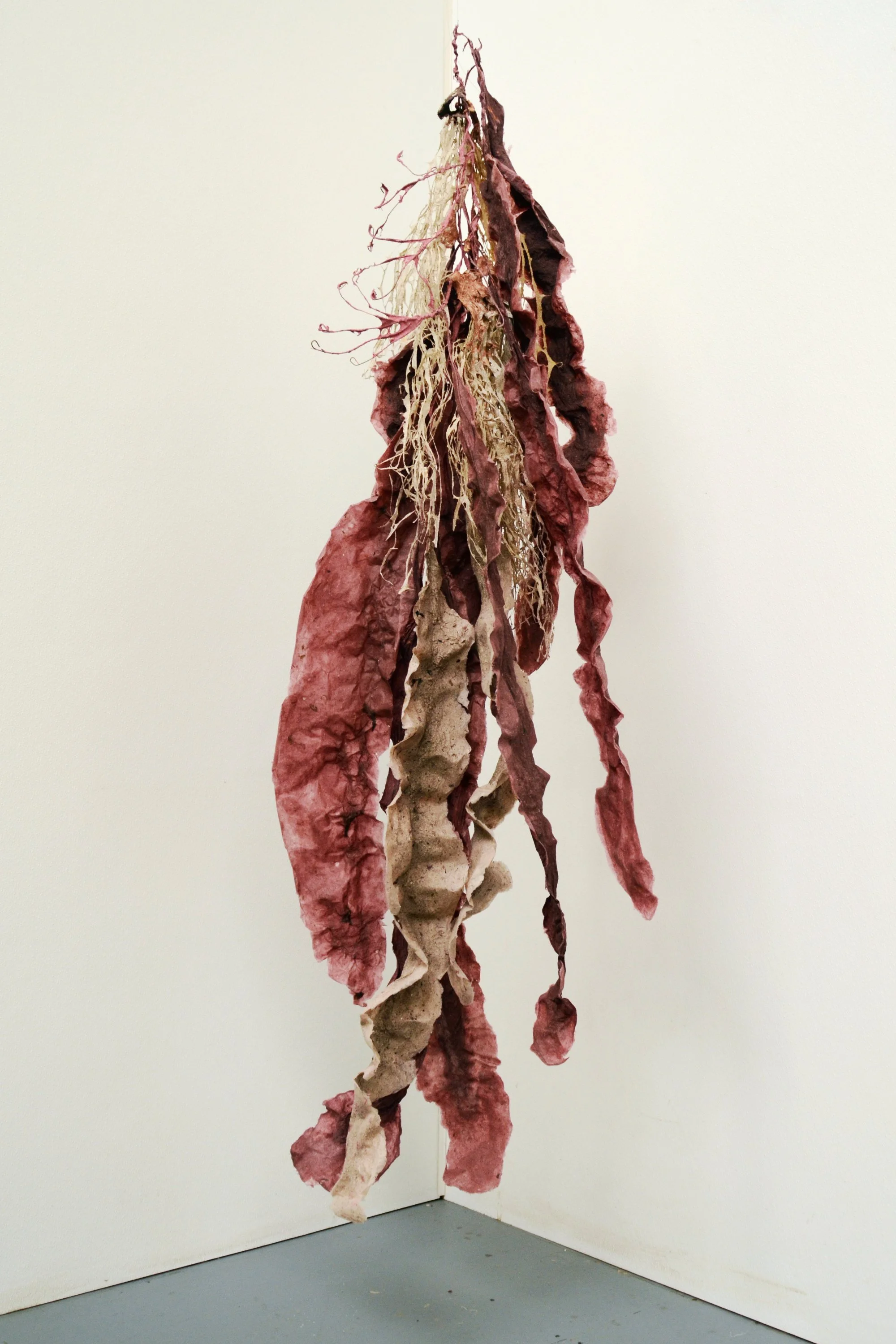
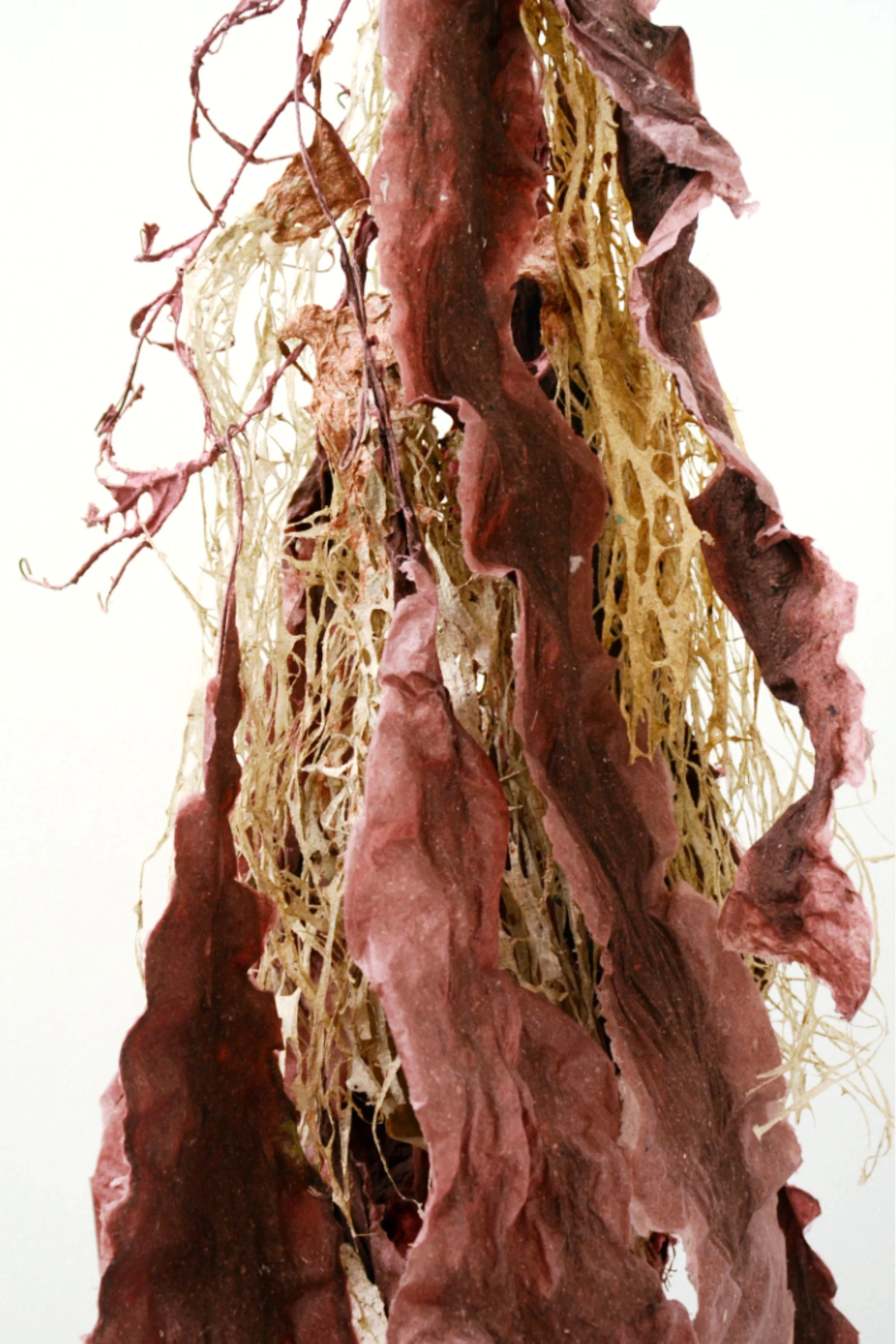
Grateloupia Saccharina
75 x 22 x 17 inches, flax, seaweed, salt marsh grass, common reed, leftover wire, 2026
Grateloupia turuturu is slippery to touch, flat-bladed and a remarkable magenta-red. At Rome Point several years ago, I found an abundance of this seaweed, which comes from the coasts of China, Japan, and Korea. Now, I find only a few.
Similarly flat-bladed, sugar kelp (Saccharina latissima) is also very rare to find growing wild in Narragansett Bay nowadays.
These two species started blending together in the papermaking studio, not quite one but not the other either. Emotionally, I have felt the same way. Not quite white, but not quite Asian either. The red forms are made of local red seaweed bioplastic paper, an experimental biomaterial made of agar and paper pulp.
COASTAL ENTANGLEMENTS
48 x 35 x 36 inches, seaweed, flax, abaca, pigments, leftover wire, 2026
Walking along one of Buzzard's Bay / Poughkeeste coastline's rocky beaches, there was a clump of common reed, goldenrod, and a few other plants growing closely together. As if they were sprouting from one point in space, then expanding outwards. "Coastal Entanglements" is the first study of these shoreline moments, of fiber and plants co-mingling. The green forms are made of green sea fingers seaweed paper.
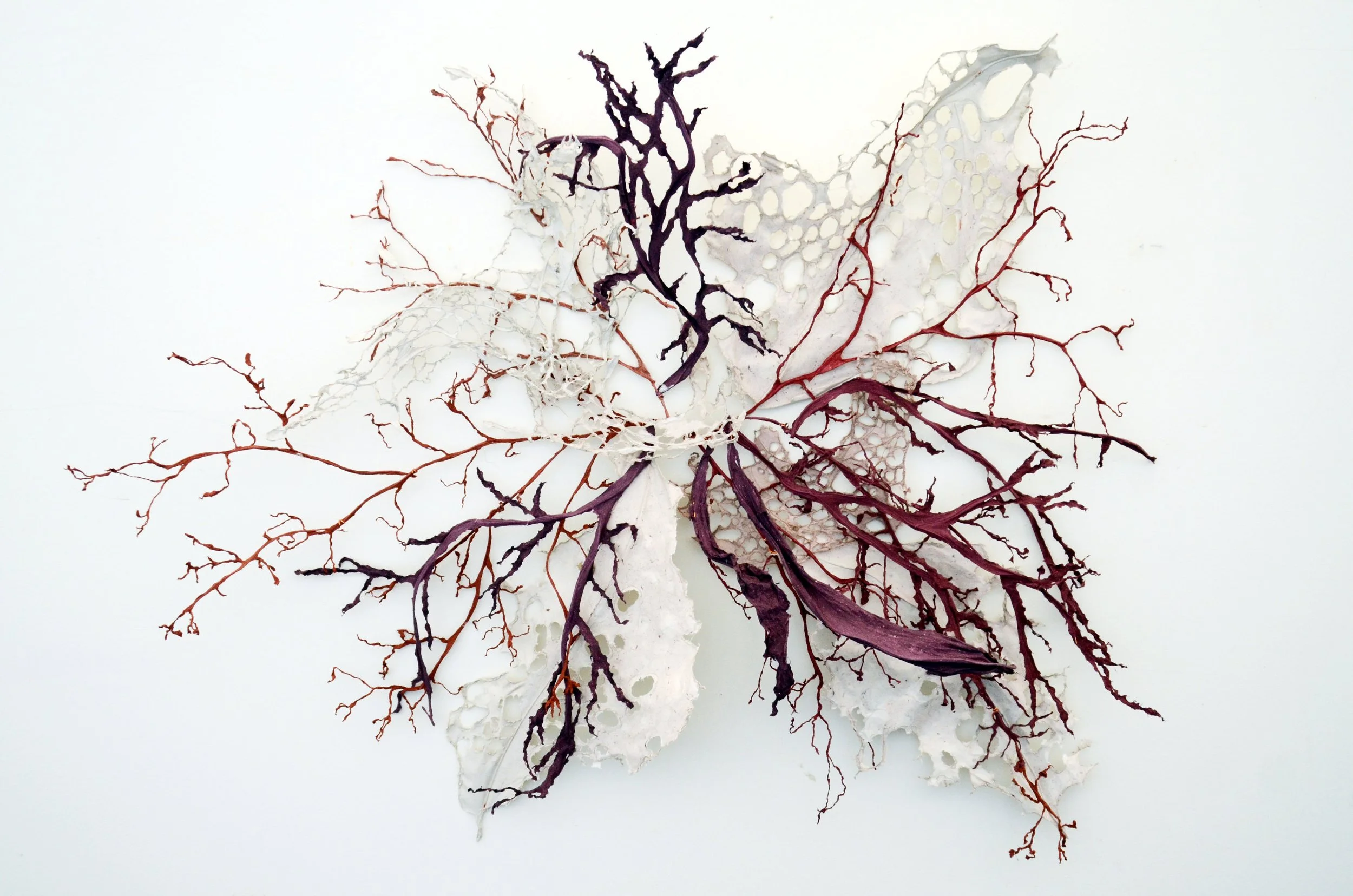
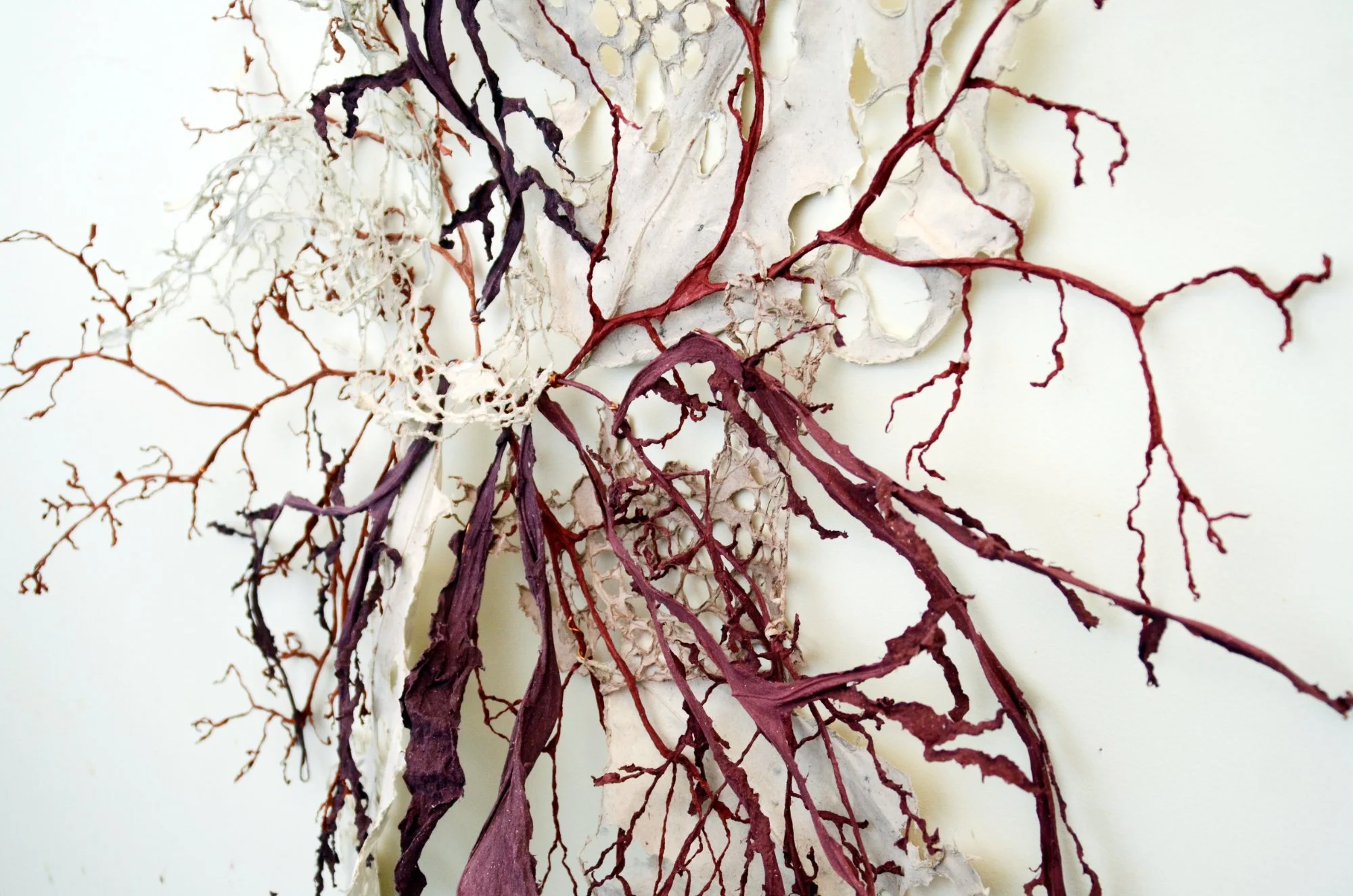
Red Seaweeds
48 x 56 x 9 inches, flax, salt marsh grass, pigments, leftover communication wire, 2026
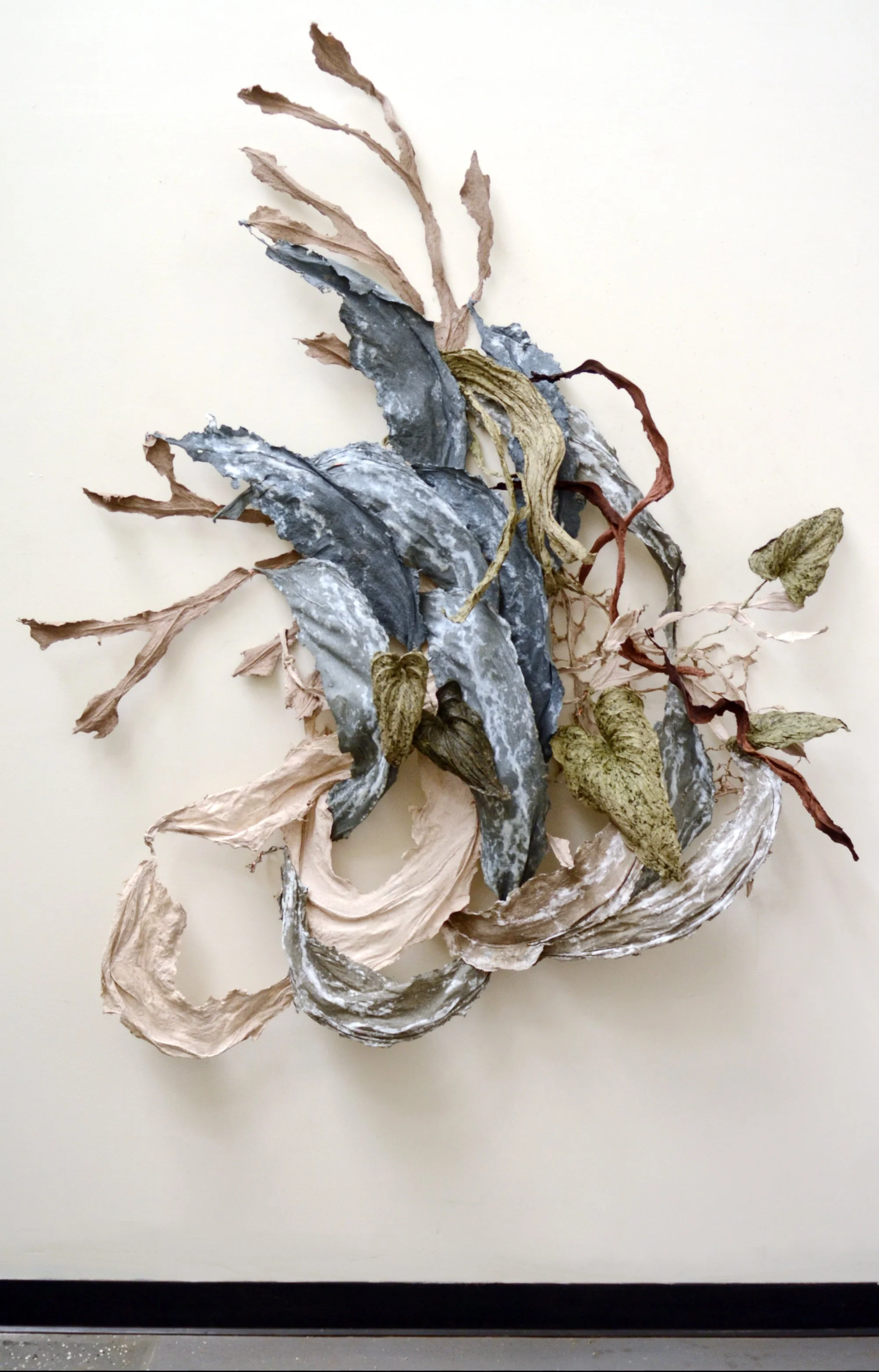
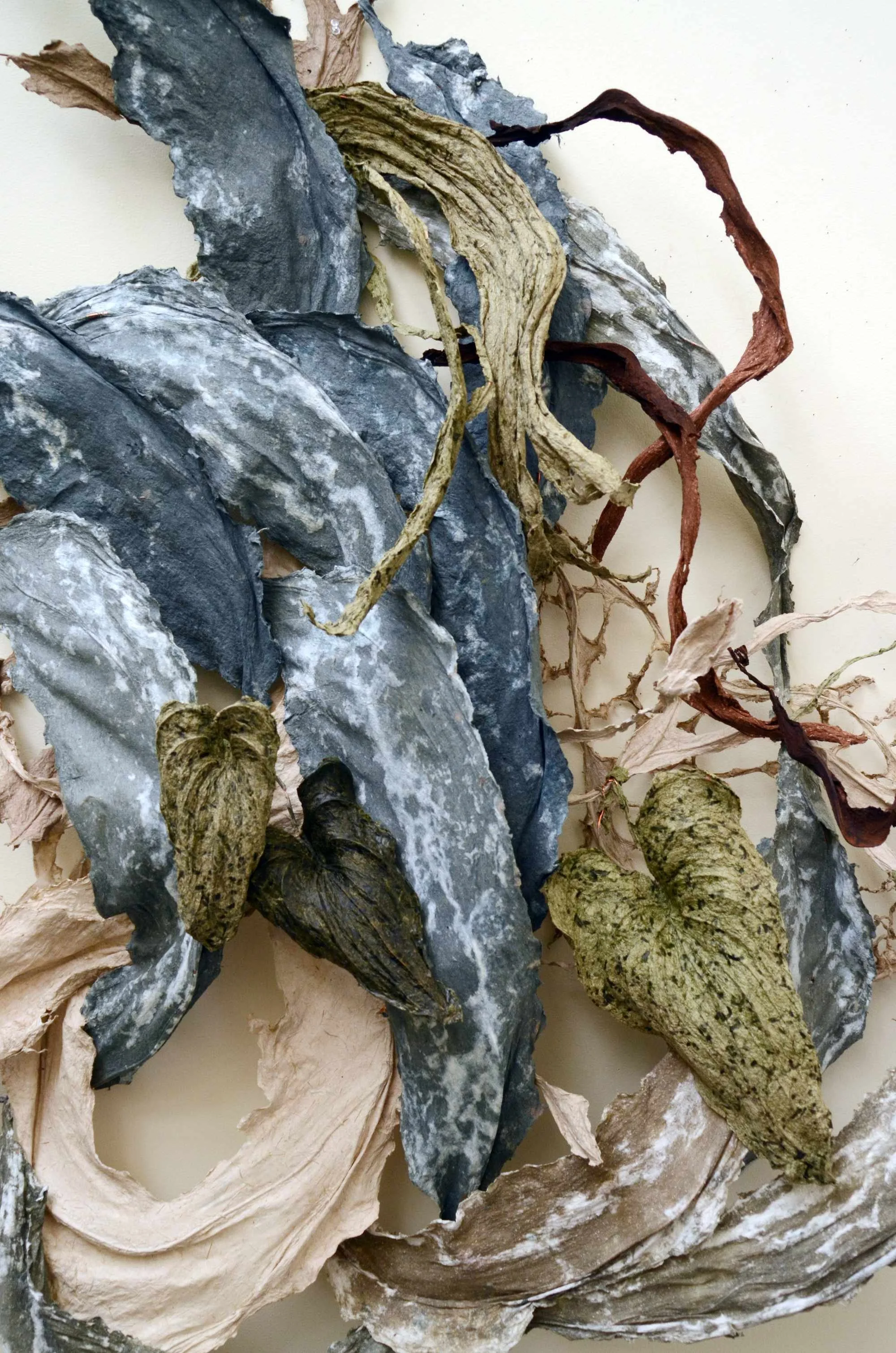
River to the Beach
68 x 58 x 9 inches, flax, seaweed paper, salt marsh grass, leftover electrical wire, black walnut, pigments, 2026
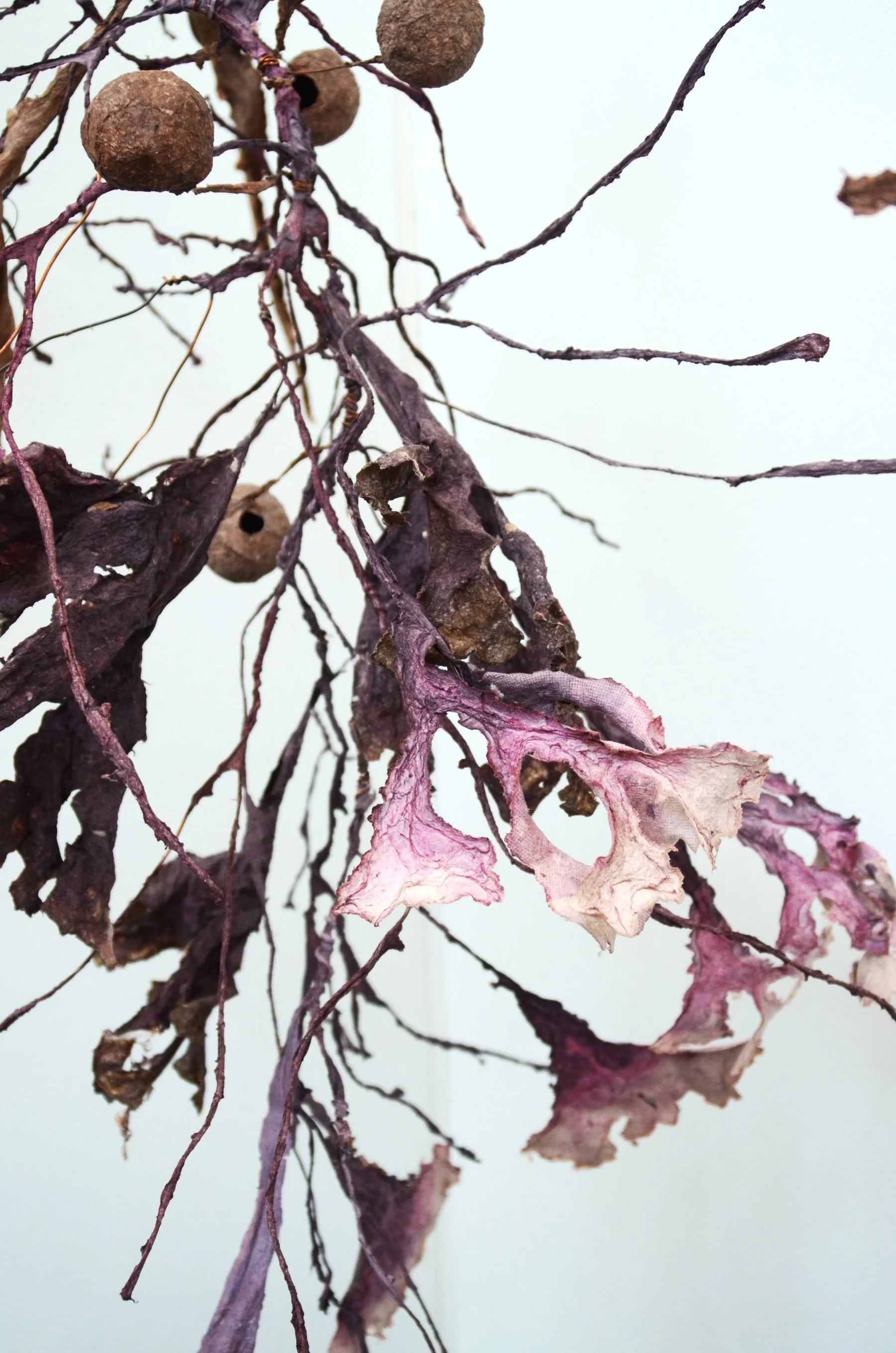
Sargassum Chondrus Heterosiphonia
62 x 48 x 42 inches, flax, seaweed, paper mulberry, leftover wire, 2026
There is no seaweed called "sargassum chondrus heterosiphonia." Here I blend the names, shapes, and materials of sugar kelp, Irish moss, and a so-called "invasive" red seaweed into one united form. Not individual and separate, but dissolving into each other, becoming whole. A summer of swimming off Atlantic beaches and rocky shorelines inspired me. The time also yielded red seaweed for making bioplastic, a gelatinous material that I mix with paper pulp, a new biocomposite innovation.
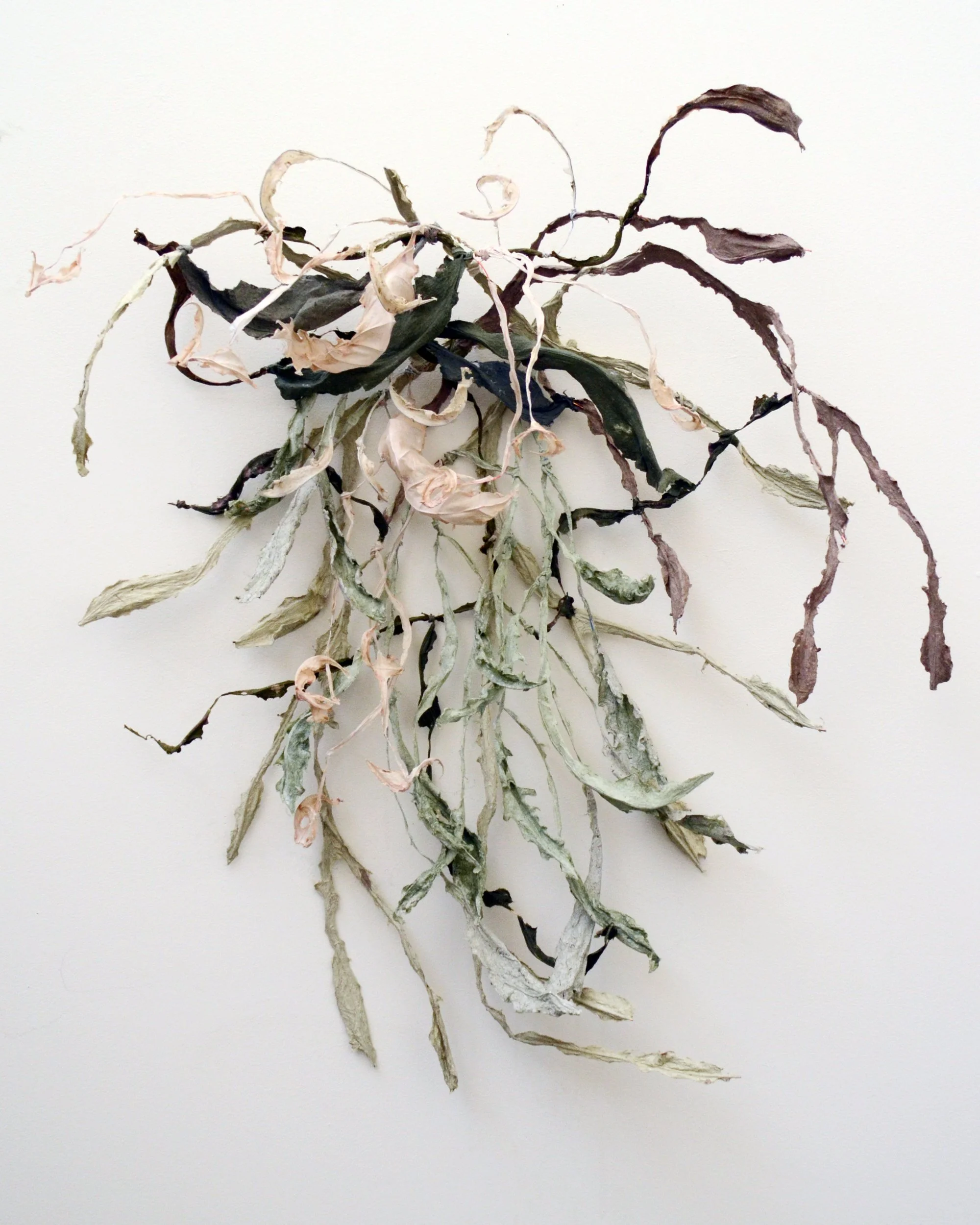
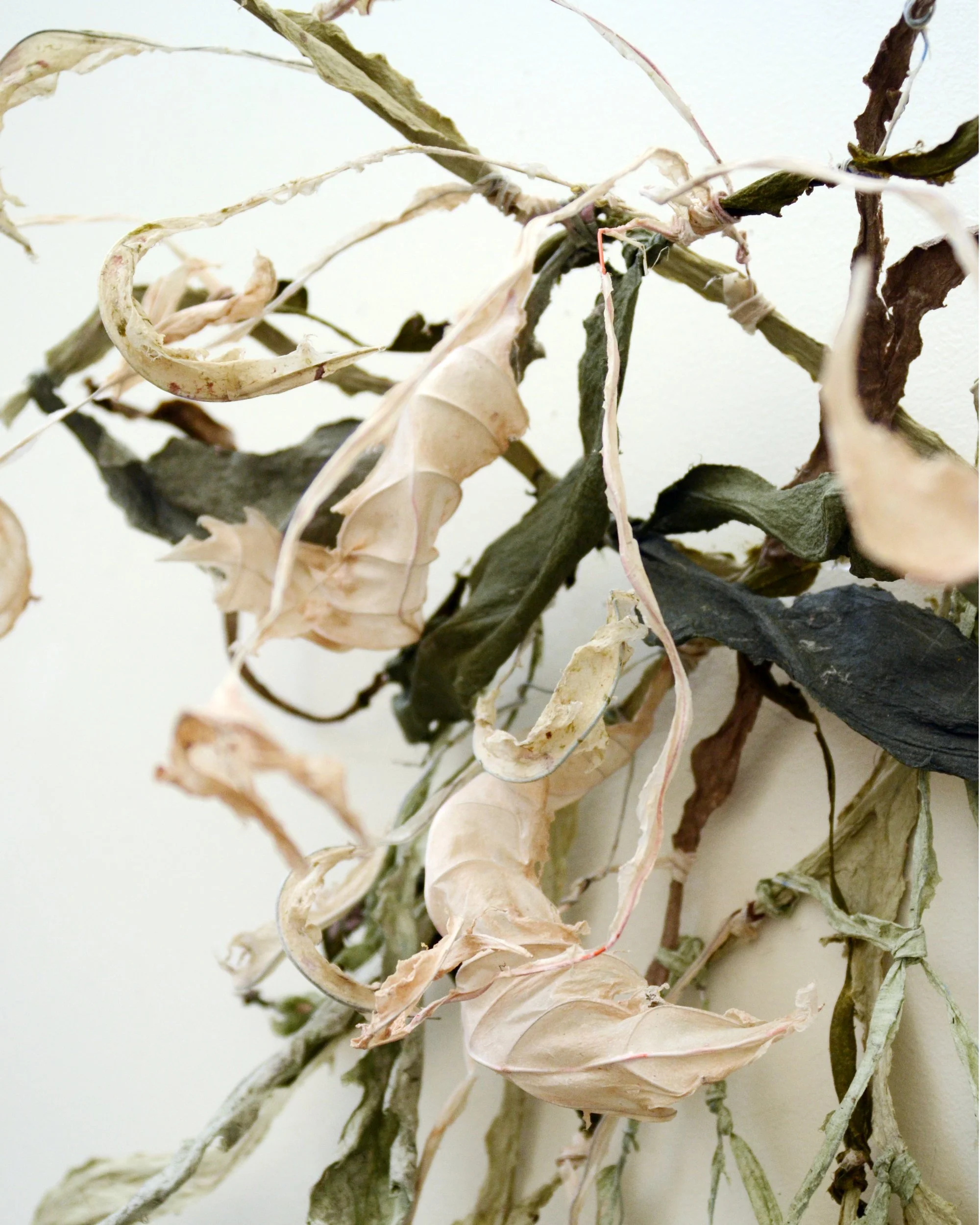
Moose Hill Flora
43 x 28 x 14 inches, flax, milkweed, pigments, leftover electrical wire
I became more intimate with Moose Hill Farm (a Trustees property in Sharon, MA) as I hiked forest trails and explored the meadows and corners. American chestnut lives here, amongst goldenrod, mosses, meadow grasses, common milkweed, and more.
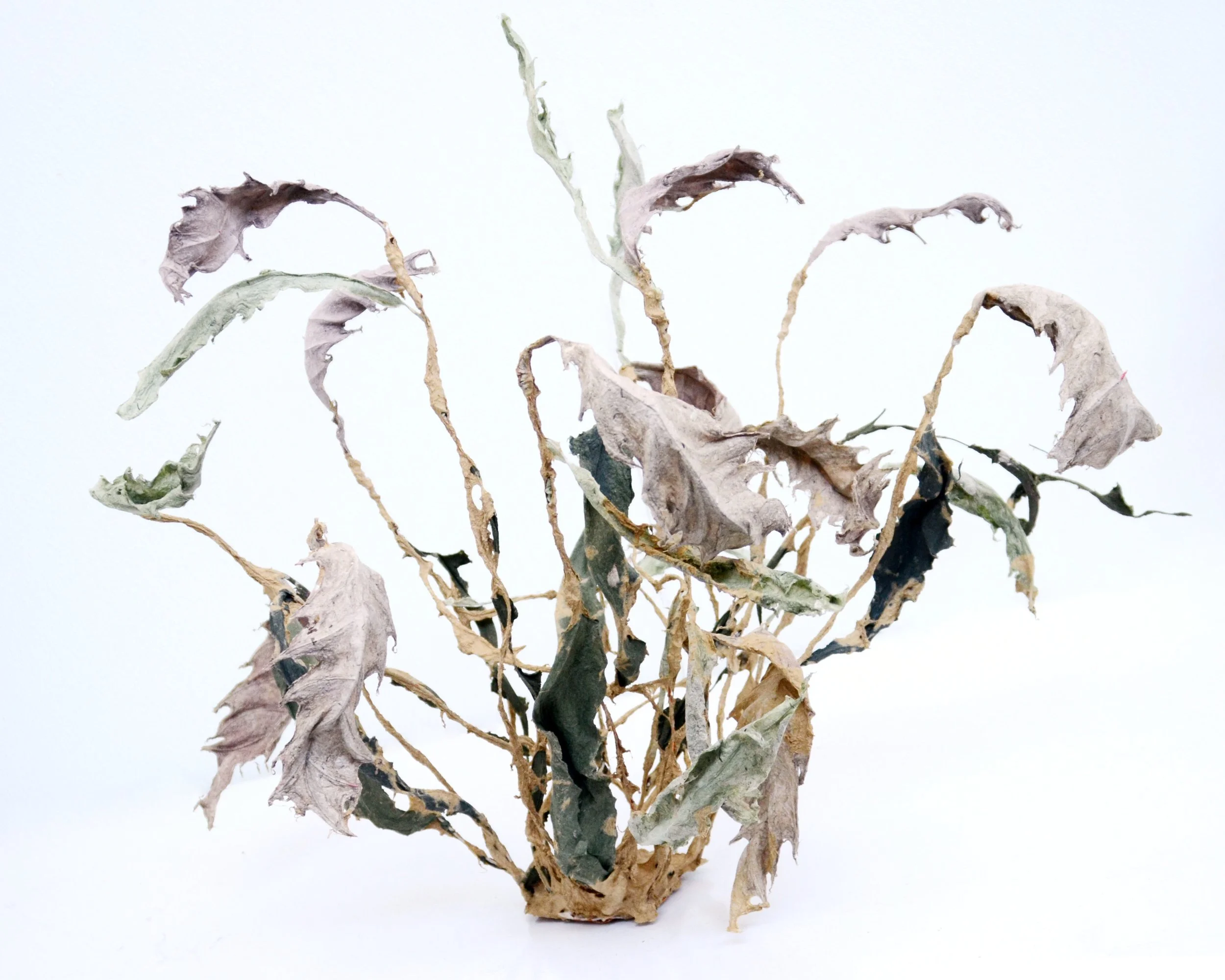
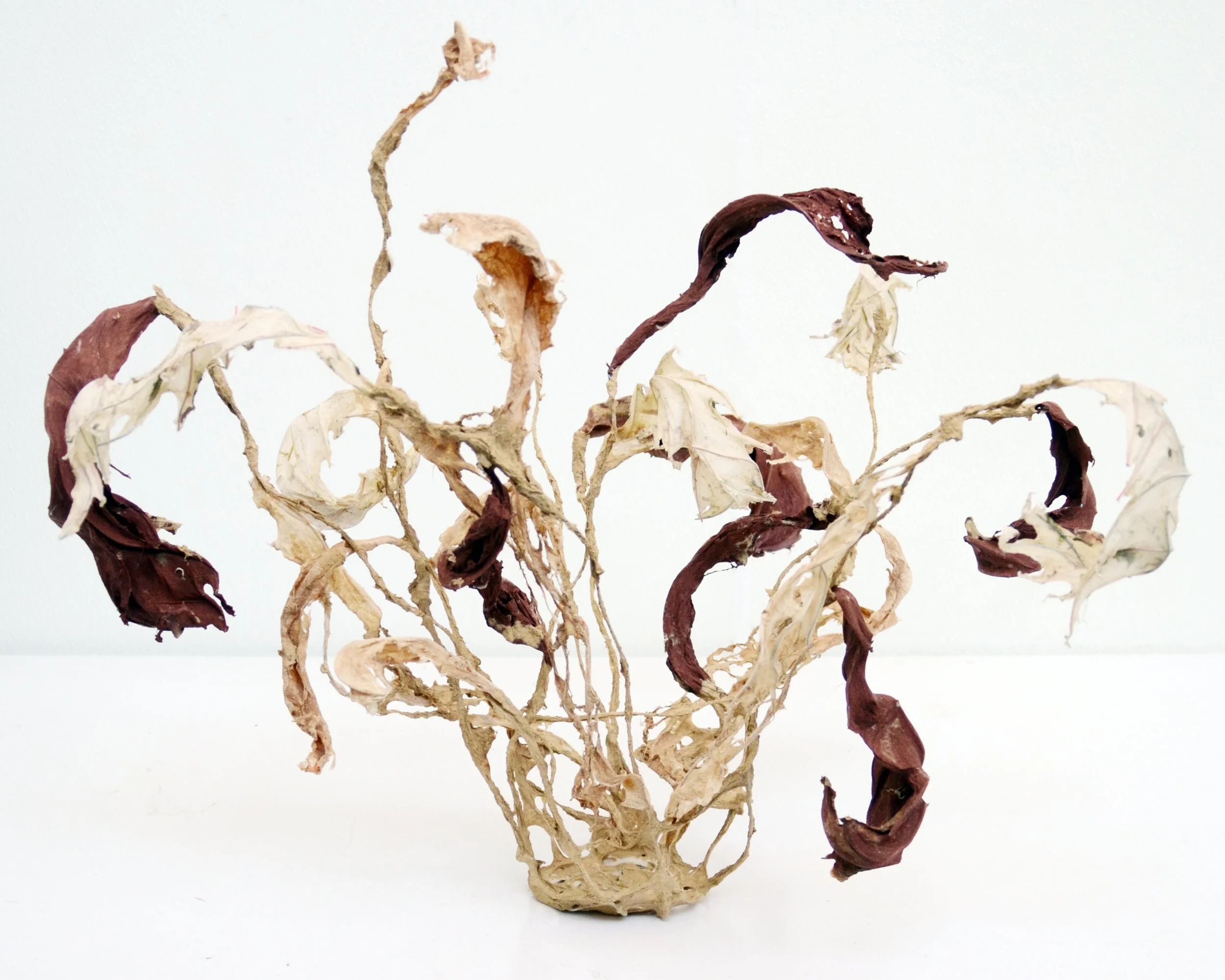
American Chestnut Moss (left), American Chestnut Blight (right)
28 x 30 x 32 inches, corn husk, flax, milkweed, pigments, leftover electrical wire. 2 of 3 sculptures
Did you know that American chestnut was once abundant in forests across eastern North American? About a century ago, a blight rendered the tree species functionally extinct. The forested slopes at Moose Hill Farm in Sharon, MA are home to several extremely rare, mature-sized American chestnut trees.
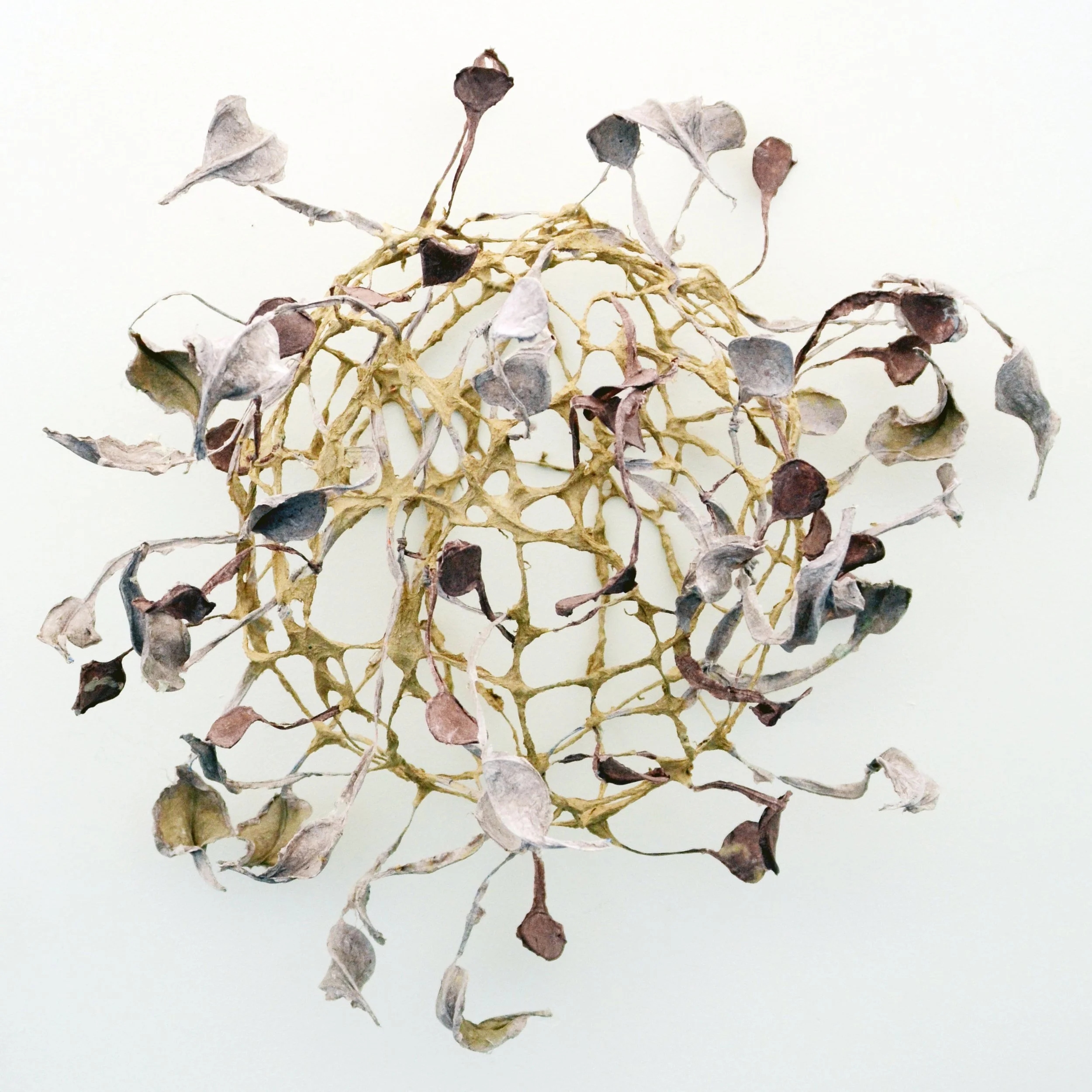
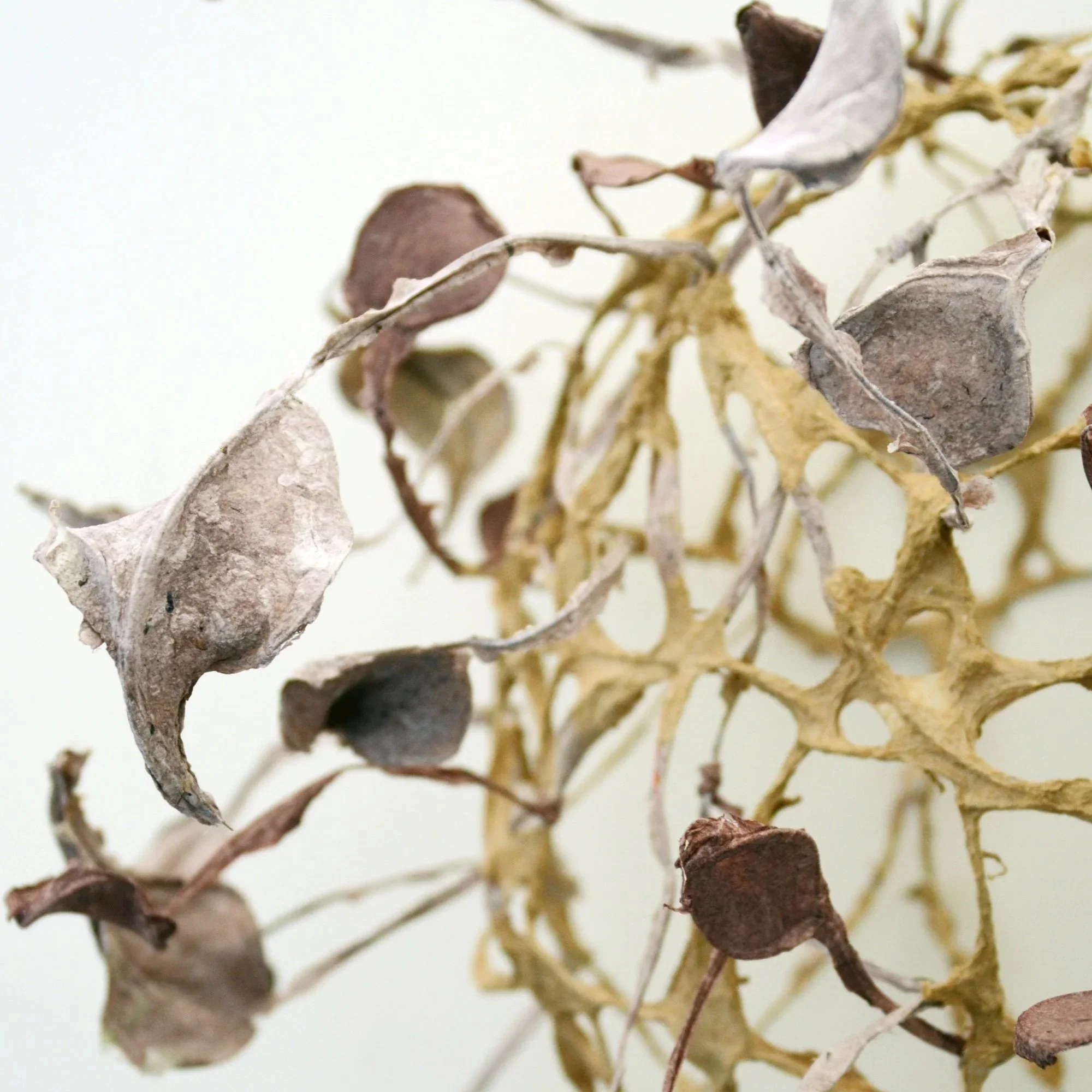
Mountain mint & milkweed
24 x 24 x 17 inches, flax, milkweed, pigments, leftover electrical wire
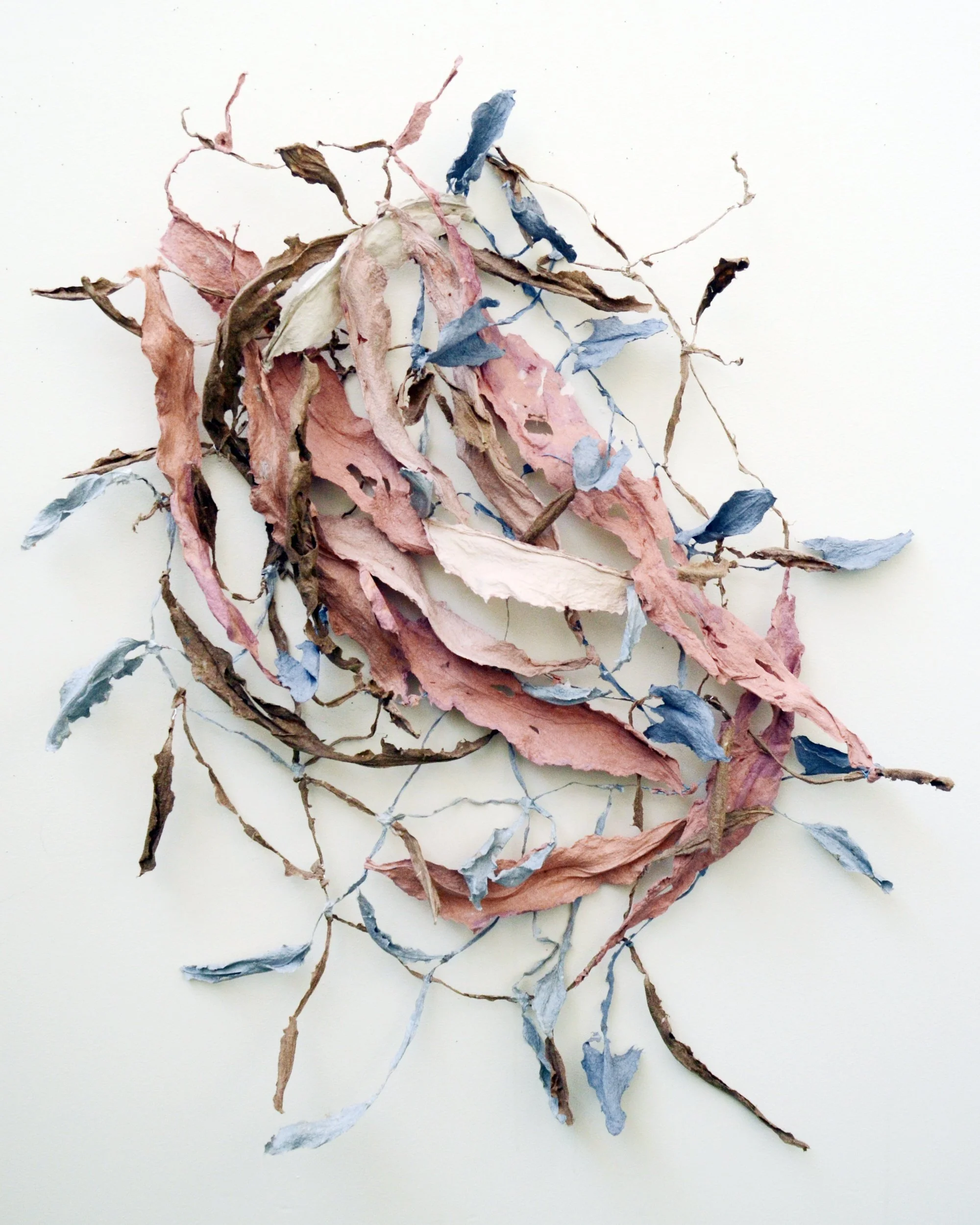
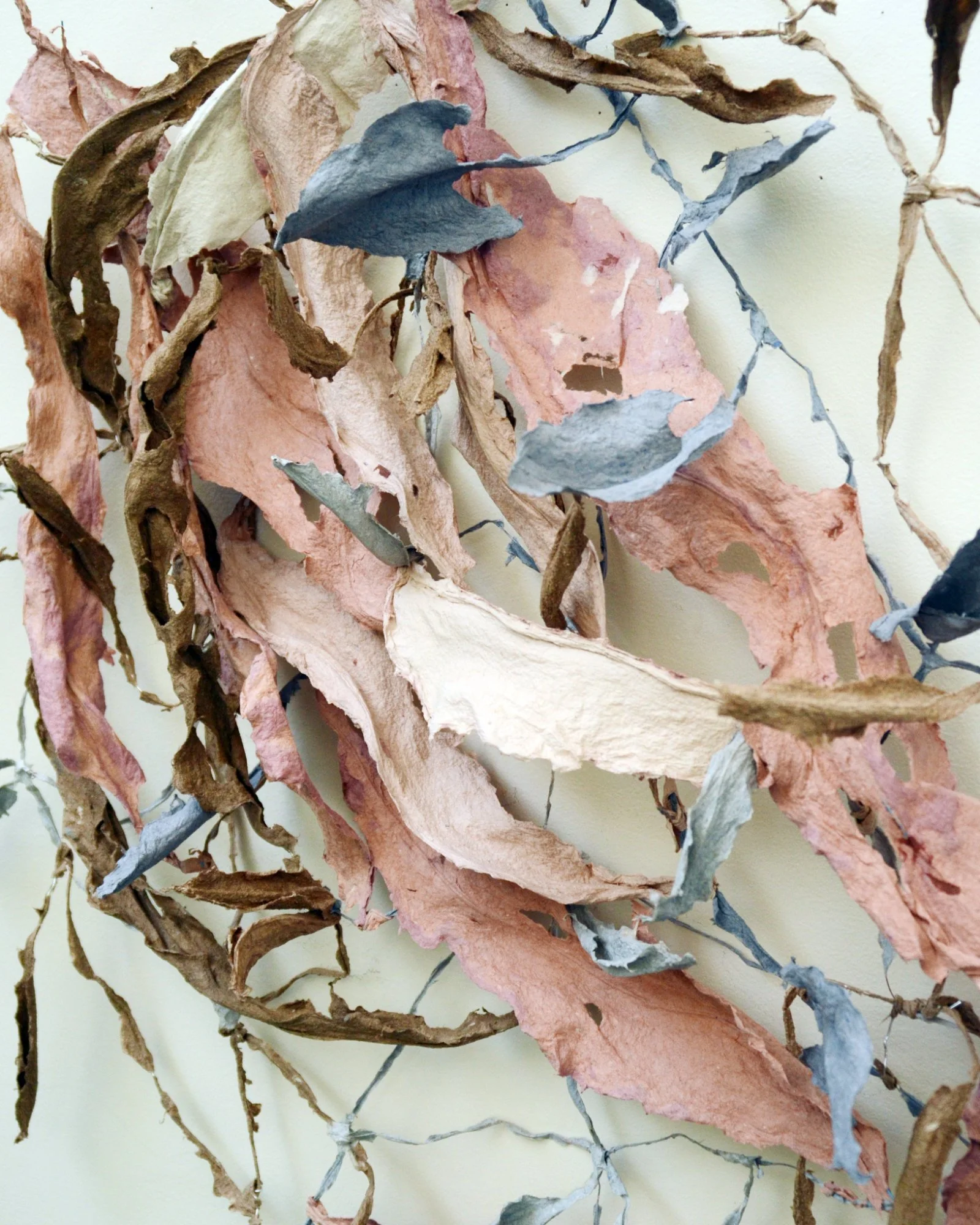
Big River Sundown
45 x 33 x 9 inches, flax, sediment, Szechuan banana, pigments, leftover electrical wire, 2026
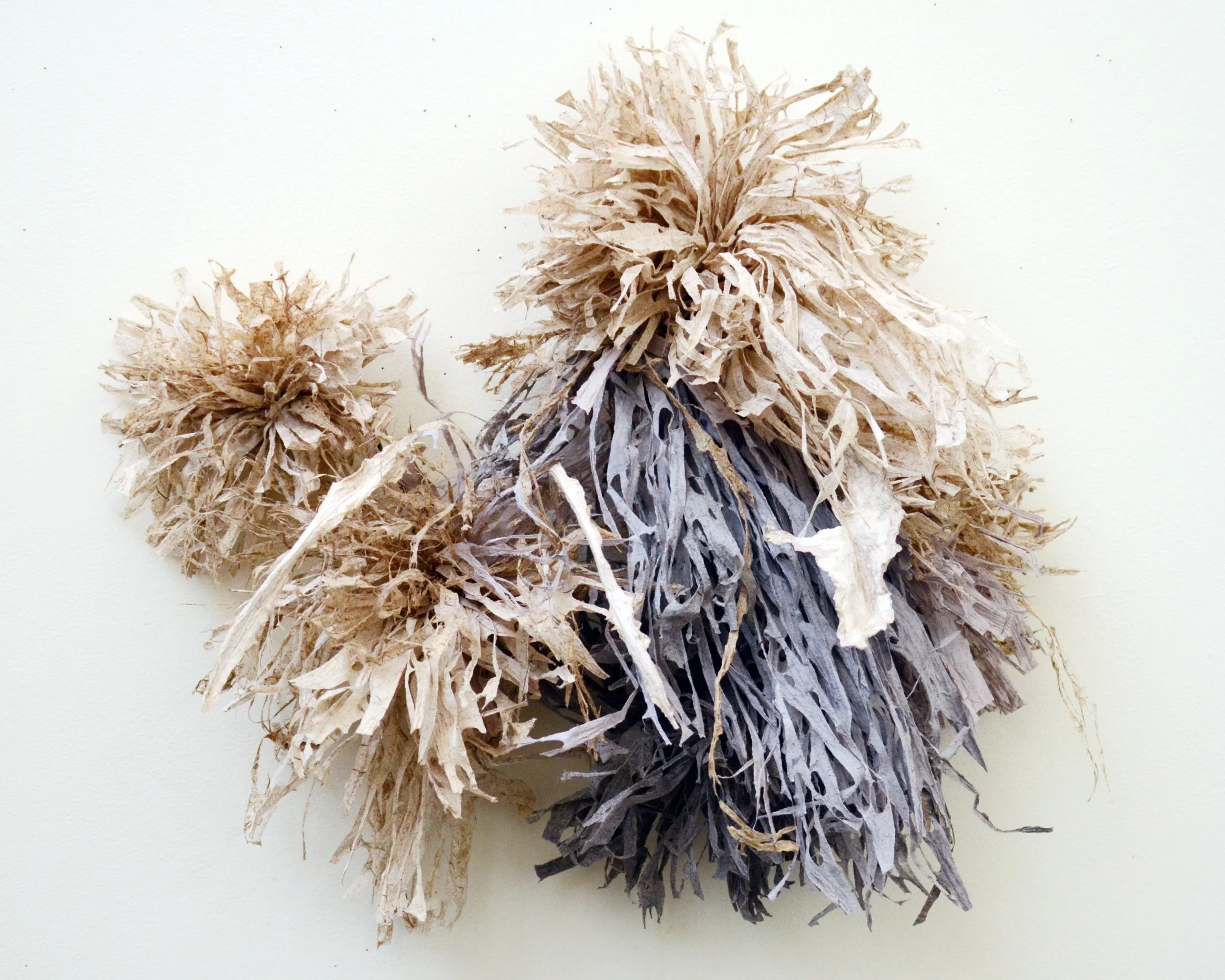
Reed Seed Fibers
21 x 22 x 10 inches, flax, salt marsh grass, pigments, thread, 2026
COMMON REED MOVEMENTS
62 x 36 x 4 in, reused electrical wire, artist-made paper pulp from sediment, jewelweed, abaca, flax, common reed, 2025
Warm fall months meant plenty of kayaking. I was drawn to Big River because it was a quiet, still, place—removed from modern life, though you go deep under the I-95 highway at one point. Going with the water flow, I observed the long lines of pond lilies, pickerelweed with spade-like leaves, and 15 ft. tall common reed alongside cattail.
Codium fragile and Lost Kelp of Narragansett Bay
40 x 50 x 3 in, reused electrical wire, Codium fragile seaweed and flax paper pulp, 2025
Kelp was once found wild-growing all the way up to Providence, RI in Narragansett Bay. Codium fragile is a so-called “invasive” Asian seaweed, increasingly present in the Bay, and originating from the coasts of Japan.
Pokeberry and Pickerelweed
29 x 38 x 4 in., reused electrical wire, pokeberry ink, artist-made paper from hardy banana, abaca, flax, common reed, 2025
BIG River PICKERELWEED
67 x 34 x 4 in., reused electrical wire, artist-made paper from sediment, Szechuan banana, abaca, flax, common reed, 2025
Pickerelweed and Phragmites
51 x 47 x 4 in., reused electrical wire, artist-made paper from sediment, jewelweed, abaca, flax, common reed, 2025